
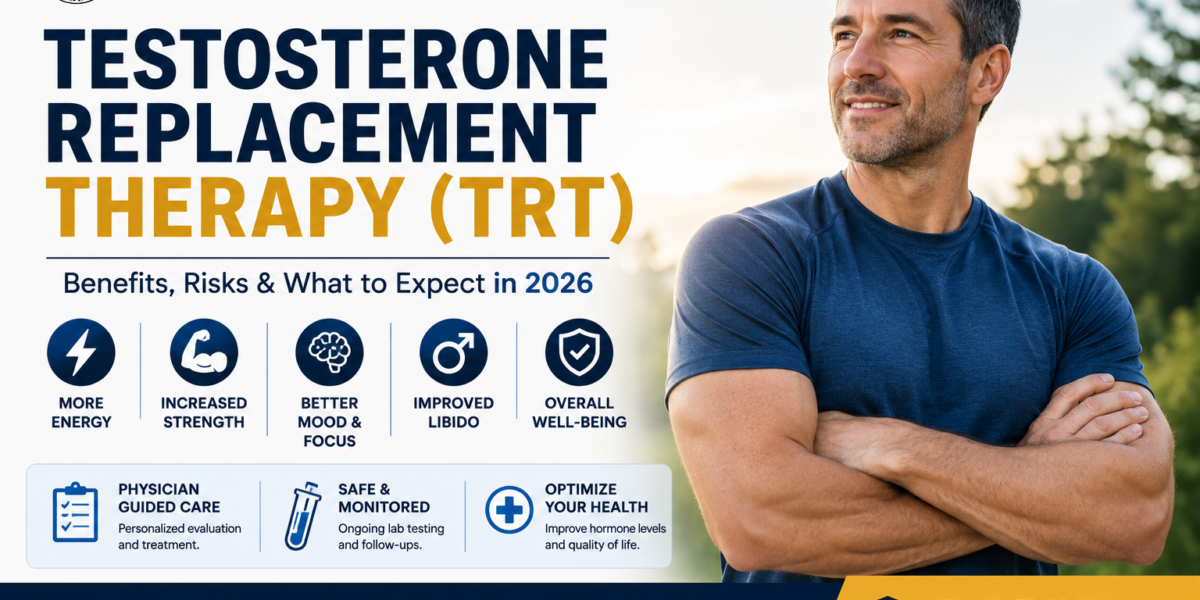
Low testosterone can affect energy levels, muscle strength, mood, and overall well-being. Testosterone Replacement Therapy (TRT) has become a widely used treatment for men diagnosed with clinically low testosterone, helping restore hormone levels and improve quality of life when prescribed and monitored by qualified healthcare professionals. TRT is generally recommended for men with confirmed hypogonadism after proper medical evaluation, rather than for normal age-related hormone decline alone.
What Is Testosterone Replacement Therapy?
TRT involves replacing testosterone through injections, gels, patches, pellets, or other approved methods to bring hormone levels back into a healthy range. Before treatment begins, a provider typically confirms low testosterone with blood tests and evaluates symptoms to determine whether therapy is appropriate.
If you’re looking for physician-guided care, explore Testosterone Replacement Therapy
Benefits of Low Testosterone Treatment
For eligible patients, Low Testosterone Treatment may provide several benefits, including:
- Increased energy and stamina
- Improved libido and sexual function
- Better muscle mass and strength
- Enhanced mood and mental clarity
- Improved bone density
While many men experience significant improvements, results vary depending on individual health, treatment consistency, and ongoing medical monitoring.
To learn more about personalized men’s wellness solutions, visit:
Understanding the Risks of Testosterone Therapy
Like any medical treatment, Testosterone Therapy carries potential risks. Possible side effects include acne, fluid retention, reduced fertility, enlarged prostate symptoms, and worsening of untreated sleep apnea. Regular follow-up appointments and blood tests help ensure therapy remains safe and effective.
Choosing an experienced Men’s Health Clinic ensures your treatment plan is customized, monitored, and adjusted as needed throughout your care.
You can also explore additional hormone optimization services here:
What to Expect During Treatment
Most patients undergo an initial consultation, laboratory testing, and a personalized treatment plan before starting therapy. During treatment, providers monitor testosterone levels, blood counts, and overall health to optimize results while minimizing potential risks.
Lifestyle improvements—including exercise, quality sleep, nutrition, and stress management—can further support the effectiveness of Hormone Replacement Therapy.
Final Thoughts
Testosterone Replacement Therapy can be an effective solution for men diagnosed with low testosterone, improving energy, strength, mood, and overall quality of life when medically appropriate. Working with an experienced provider ensures safe treatment, regular monitoring, and long-term health benefits.
Healthcare practices looking to grow their online presence can also partner with IRPR Agency for expert SEO, digital marketing, branding, and patient acquisition services: